


The Fairy Tale and Music Tour of Prague: Searching for the Moving Astronomical Clock, Black Light Plays, and Puppet Shows
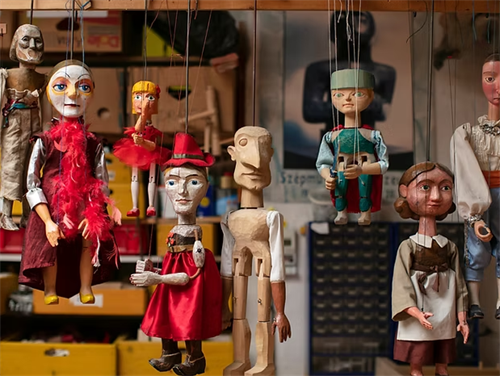
Prague has an unusual ability to feel theatrical without being artificial. For families, this matters more than beauty alone. Children do not experience cities as static collections of landmarks; they experience them through movement, sound, waiting, surprise, and repetition. Prague excels at all five.
This is a city where time performs publicly, stories are told without words, and music leaks into streets rather than hiding behind ticket counters. It is also a city that is forgiving to families: compact, walkable, affordable by European capital standards, and layered in ways that reward curiosity rather than speed.
Why Prague Is Exceptionally Well-Suited to Family Travel?
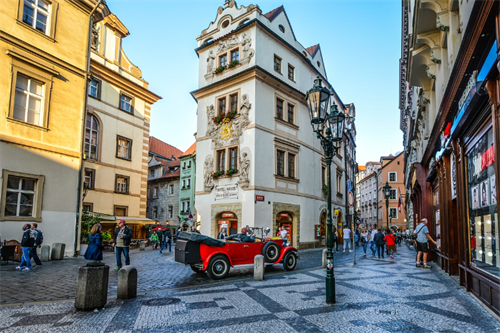
Prague’s historic center has remained remarkably intact, earning UNESCO World Heritage status in 1992 (UNESCO, 2023). What that designation doesn’t fully capture is how human-scaled the city remains. Streets curve rather than sprawl. Major sights cluster close enough to feel connected but not overwhelming. Visual rewards arrive just as legs begin to tire.
For families, this translates into days that feel full without being exhausting. Most key experiences—Old Town Square, Charles Bridge, Malá Strana, and even parts of Prague Castle—can be linked together on foot with frequent opportunities to stop, sit, and observe.
Equally important is Prague’s emphasis on performance culture. History here is animated rather than displayed. Clocks move. Puppets speak. Music drifts across bridges. Children are not asked to imagine the past; they watch it happen.
The Astronomical Clock: Teaching Attention in a Distracted World
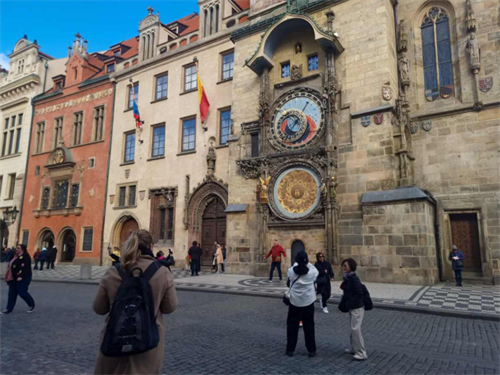
The Prague Astronomical Clock is often described as underwhelming. For families, that critique misses the point entirely.
Installed in 1410, the clock is the oldest astronomical clock still in operation (Šmahel, 2014). Every hour, it performs a brief mechanical procession: apostles pass, Death rings a bell, a rooster crows. The spectacle lasts less than a minute.Its value for children lies not in the show, but in the anticipation.
How families can experience it differently?
Arrive 15–20 minutes early and stand slightly to the side of the square rather than directly underneath. This reduces crowd pressure and neck strain for children. Instead of explaining everything, turn waiting into observation:
Who notices Death first?
Which figure moves last?
What sound comes before the rooster?
Parents often report that children remember the waiting more vividly than the movement itself. In a world where entertainment is instant, the clock becomes a rare shared lesson in patience and focus.
Pickpocketing does occur during peak hours, particularly when crowds gather and eyes are raised. Staying aware—and positioning children slightly in front of you rather than behind—minimizes risk.
Walking Tours: When Stories Replace Distances
Prague is best understood on foot, but for families, guided walking tours offer more than convenience. A skilled guide transforms distance into narrative.
A well-paced Old Town and Malá Strana tour introduces children to Prague’s layered history—medieval trade routes, Habsburg power, communist rule, and the Velvet Revolution—without overwhelming detail. Short stops, visual storytelling, and human anecdotes matter more than dates.
Cobblestones make bike tours less suitable for children. Walking allows families to pause at Wallenstein Garden, hidden courtyards, or quiet side streets when attention flags.
For families with children aged 8+, tours that include Prague Castle from the outside first, followed by interior exploration later, tend to work best. The scale becomes understandable before fatigue sets in.
Prague Castle: Managing Scale Without Losing Wonder
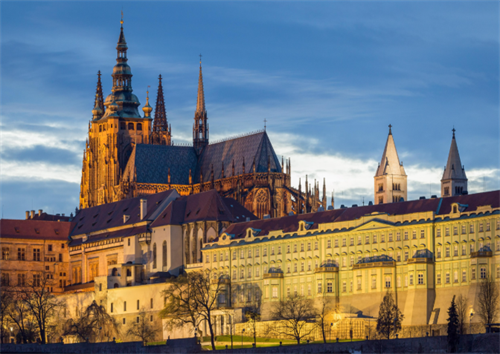
According to Guinness World Records, Prague Castle is the largest ancient castle complex in the world, covering nearly 70,000 square meters. For families, this scale can be either exhilarating or exhausting.
The key is selective depth.
St. Vitus Cathedral impresses children not because of theology, but because of height, light, and sound. Golden Lane works because it feels storybook-small after monumental spaces. Climbing the cathedral tower is rewarding for older children, but optional.
Rather than attempting to “see everything,” families benefit from choosing two anchor experiences and letting the rest unfold organically. Castle gardens offer essential decompression space, especially after interior visits.
Charles Bridge: Timing Is Everything
Charles Bridge is unavoidable—and that’s precisely why timing matters.
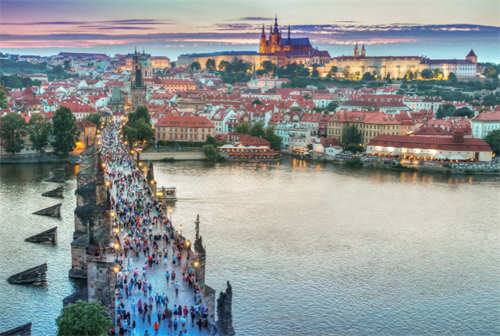
Completed in 1402, the bridge connects Old Town with Malá Strana and remains lined with statues, artists, and musicians. During midday, it can feel like a slow-moving queue.
For families, early morning or late evening crossings transform the experience entirely. At sunrise, mist often hangs over the Vltava River, and musicians tune instruments quietly rather than perform loudly. Children notice echoes, footsteps, and the sound of water rather than crowds.
Climbing one of the bridge towers adds context and offers children a chance to see the city from above—a perspective shift that often renews interest.
Black Light Theatre: Storytelling Without Language
Prague’s black light theatre tradition remains one of the city’s most family-accessible cultural experiences. Under ultraviolet lighting, performers manipulate fluorescent objects and bodies, creating illusions of floating, transformation, and disappearance.
What makes this powerful for families is universality. No spoken language is required. Children understand through movement and color. Younger children react emotionally; older children analyze technique.
Shows lasting around 60 minutes suit family attention spans best. Early evening performances (6:00–7:30 p.m.) work particularly well, allowing dinner afterward rather than before.The Prague Theatre Institute (2022) notes that black light theatre continues to attract international audiences precisely because it transcends linguistic and cultural barriers.
Puppet Theatre: Czech Heritage in Human Scale
Czech puppetry has historically preserved language and folklore during periods of political suppression (Pospíšilová, 2018). For families, this history becomes tangible rather than abstract.
Puppets exaggerate gesture and emotion. Children intuitively grasp narrative structure when stories are told through visible mechanics. Unlike digital entertainment, puppetry invites questions rather than consuming attention.
Pairing a puppet performance with a museum visit or workshop earlier in the day deepens understanding. Children often leave discussing how puppets work rather than simply what happened—a sign of genuine engagement.
Music in Daily Life: Letting the City Perform
Prague’s musical identity extends far beyond formal concerts. Street musicians on bridges, in squares, and near tram stops turn ordinary movement into performance.
Encourage children to notice how sound changes under arches or near water. These informal experiences often leave stronger impressions than ticketed events.
Short classical concerts in churches—particularly near Charles Bridge or Old Town Square—work well for families when limited to about an hour. The architecture itself becomes part of the experience.
Seeing Prague From the Water:
River cruises on the Vltava offer families a chance to rest while still absorbing the city’s form. For children, seeing landmarks from water reinforces spatial understanding.
Daytime or sunset cruises are preferable for families. Dinner cruises often extend too late for younger children. Channel cruises through quieter waterways appeal to children who enjoy noticing small details rather than grand views.
Petřín Hill: Effort That Feels Earned
Petřín Hill combines exertion with reward. The climb can be demanding for younger children, but the funicular provides a family-friendly alternative when operational.
The Petřín Tower—often compared to the Eiffel Tower—offers panoramic views that help children mentally map the city. Descending through gardens afterward turns the visit into a relaxed exploration rather than a single objective.
Eating With Children in Prague:
Czech cuisine is more family-friendly than often assumed. Dumplings, roast chicken, soups, and mild sauces suit most palates.
Lunch works best as the main meal. Portions are generous, service is efficient, and energy levels are higher. Evening meals can be lighter—soups, pastries, or shared plates.
Places like Manifesto Market offer variety that suits families with mixed tastes. Its cashless system simplifies logistics, and its relaxed atmosphere allows children to move without disrupting others.
Street treats like trdelník provide simple joy, though parents should treat them as snacks rather than meals.
Getting Around: Transport That Reduces Friction
Prague’s tram system is exceptionally family-friendly. Trams arrive frequently, are easy to board, and offer visual stimulation that children enjoy.
Multi-day transport passes simplify planning. The Lítačka app allows families to manage tickets digitally, reducing stress.
Walking remains central, but trams extend range without fatigue.
Where to Stay: Location Over Luxury
For families, where you stay matters more than how many stars a hotel has.
Old Town offers proximity but higher prices and heavier crowds. Malá Strana provides a quieter atmosphere with easy access via foot or tram. Neighborhoods like Karlín offer a glimpse of modern Prague while remaining well-connected.
Self-catering apartments work well for families needing space, kitchen access, or flexible meal times.
Helping Children Reflect Without Pressure:
Families who retain the deepest memories build in light reflection without formal structure:
One daily open-ended question at dinner;
A shared sketchbook rather than a journal;
Collecting impressions, not souvenirs;
These practices transform experience into understanding.
Families rarely leave Prague talking about how many sights they saw. They talk about waiting together for a clock to move, sitting quietly in a dark theatre watching glowing shapes tell a story, or hearing a violin echo across a bridge at dawn.Prague teaches families to slow down without stopping, to observe rather than rush, and to experience culture as something alive rather than curated. In a travel landscape increasingly shaped by speed and spectacle, this is its quiet, lasting gift.
References:
[1]Prague Theatre Institute. (2022). Black light theatre and contemporary performance traditions in Prague. https://www.idu.cz
[2]Pospíšilová, J. (2018). Czech puppetry as intangible cultural heritage. National Information and Consulting Centre for Culture. https://www.nipos.cz
[3]Šmahel, F. (2014). The medieval concept of time and astronomical clocks in Central Europe. Charles University Press.
[4]UNESCO. (2023). Historic Centre of Prague. https://whc.unesco.org
Recommended for you: