


Swiss Alpine Pastoral Parent-Child Class: In the process of cheese-making, hiking and the sound of bells, learn about the rhythm of life
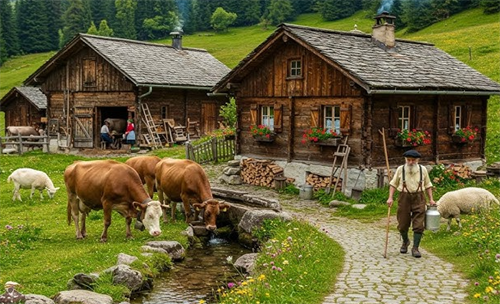
In summer, Switzerland does something quietly remarkable. The snow retreats, the high meadows reappear, and the Alps—often imagined as distant, dramatic backdrops—become lived-in landscapes again. Grass pushes through thawed soil, wildflowers color slopes that seemed inhospitable months before, and families emerge onto trails with picnic baskets that almost always contain one essential item: cheese.
For traveling families, this season offers more than postcard beauty. Summer in the Swiss Alps is when agriculture, ecology, and daily life align most visibly. Cows move upward from valleys to middle and high alpine pastures, bells ringing softly as they go. Farmers reopen mountain huts. Trails reconnect villages to dairies. And suddenly, learning stops feeling like a structured activity and starts happening naturally—through hands, feet, taste, and shared effort.In order to make this unique experience a success, the following is a detailed guide specifically prepared for family travelers.
Why Summer Alpine Pastures Are Switzerland’s Best Family Classroom
The Swiss alpine system—known as Alpwirtschaft—is based on seasonal movement. Each early summer, herdsmen guide cows from lowland farms to progressively higher meadows, allowing valley grasslands to recover while alpine pastures are grazed intensively for a few months. This rhythm is ancient, predating modern Switzerland itself, and it remains economically and environmentally relevant today[1].
For families, this system creates a rare opportunity: children can witness a complete food cycle in real time. Grass becomes milk. Milk becomes cheese. Cheese becomes sustenance, trade, and culture.
The bells that children hear—often their first sensory memory of the Alps—are not decorative. Each cow’s bell is tuned differently, allowing herdsmen to locate animals by sound across steep terrain. Watching cows navigate slopes that seem nearly vertical to humans, parents often joke about their “mountaineer skills,” but the truth is more impressive: generations of selective breeding have produced animals uniquely adapted to alpine topography.
This is not folklore. It is applied biology.
Milk Squeezing: Learning Humility, Not Performance
Milking a cow on an alpine pasture is not designed for visitors, and that is precisely why it works as a learning experience.
Unlike industrial dairies—where automated systems hide labor—alpine milking is intimate and unhurried. Farmers clean the udder, speak softly to the animal, and work by rhythm rather than speed. Children quickly learn that force doesn’t help. Patience does.
I once watched a family in the Bernese Oberland where the parents expected their children to lose interest within minutes. Instead, the opposite happened. The kids became absorbed—not because milking was “fun,” but because it demanded attention. When milk finally hit the bucket, there was no applause, only quiet satisfaction.
Later, the farmer explained that alpine milk tastes different because cows feed on dozens of herbs and wildflowers—sometimes more than sixty species across a season. That biodiversity directly affects fat content and aroma, which is why alpine milk is prized for summer cheese production[2].
This is the moment when abstract ideas—terroir, sustainability, biodiversity—stop being words.
Cheese Making: Time as the Missing Ingredient
Switzerland produces more than 450 distinct varieties of cheese, an astonishing number for a country its size. On average, it takes roughly one gallon of milk to produce one pound of cheese, yet only about half of Switzerland’s milk supply is used for cheesemaking. Even so, cheese remains the cultural and culinary backbone of rural life.[3]
On alpine pastures, cheese is made not for display but necessity. Summer milk must be preserved for winter, and cheesemaking is the solution refined over centuries.
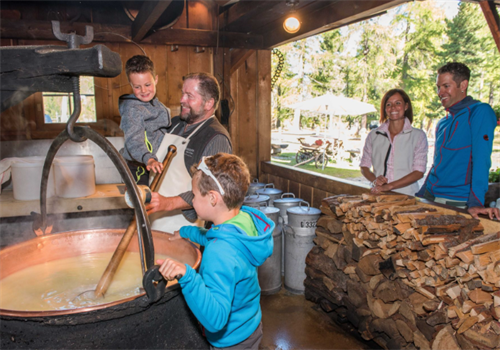
For families, participating in cheese making—whether at an alpine hut in Appenzell or along the dairy paths near Gruyères—becomes a lesson in delayed gratification. Children stir curds, measure temperatures, taste whey, and slowly realize that nothing happens instantly. Some programs allow families to label a small wheel and receive it weeks later, reinforcing the idea that good things require waiting.
In Appenzell, I observed children creating labels for Mutschli cheese after helping stir curds in a cauldron over a wood fire. One child asked why machines weren’t used. The cheesemaker’s answer was simple: machines don’t adapt to weather, milk, or mood. Humans do.
That answer stayed with the family long after the cheese arrived by post.
Hiking Between Dairies: Movement With Meaning
A summer visit to the Swiss Alps is incomplete without walking—not aimlessly, but with intention. Trails connecting alpine huts and dairies transform hiking into a narrative experience.
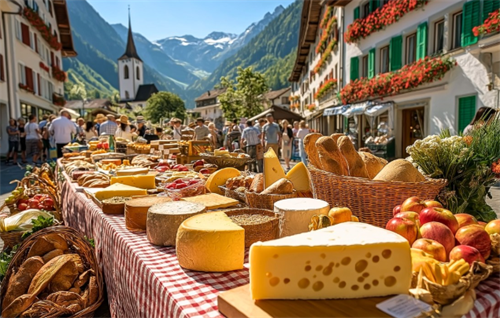
In the Gruyères region, families can walk from Pringy to Moléson along established Cheese Dairy Paths, passing cows grazing on open slopes, wooden chalets with shingle roofs, and small dairies producing Gruyère AOP and Vacherin Fribourgeois AOP. These walks are not physically demanding, but they are conceptually rich. Children begin to see how geography determines flavor and why certain cheeses can only be made in specific places.
In Emmental, families who prefer wheels to walking often choose the Cheese Route—an e-bike journey through rolling farmland, historic towns, and show dairies. Technology here does not replace tradition; it extends access. Parents appreciate that electric bikes level the physical playing field while preserving landscape engagement.
The key is not distance. It is continuity.
Festivals, Queens, and Living Tradition:
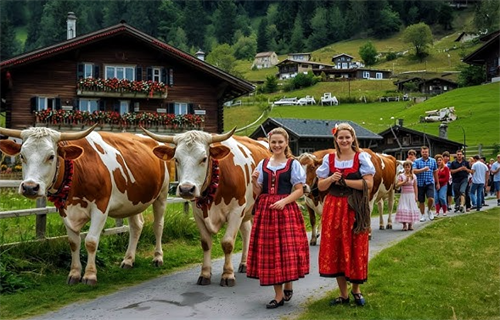
By late summer, alpine life turns celebratory. As cows descend back to valleys in events known as Alpabzug, villages gather to mark the transition. In cantons like Appenzell, Valais, and Fribourg, herds parade through streets adorned with flowers, bells polished, herdsmen dressed in regional attire.
In Valais, families may witness Hérens cows competing to establish hierarchy, with the strongest crowned “Queen” of the herd. This is not spectacle for tourists—it is social order within the animal community, recognized and respected by humans.
For children, seeing animals treated as individuals rather than units is often eye-opening. It reframes how they think about farming, leadership, and care.
Staying on Farms: When Accommodation Becomes Education
Farm stays across Switzerland—from Thurgau near Lake Constance to alpine valleys—allow families to step fully into rural life. Feeding animals, grooming horses, sleeping in haylofts, and eating breakfasts sourced meters away from the table create a sense of belonging, not consumption.
Parents sometimes worry these experiences will feel “too simple.” In practice, simplicity is the appeal. Children fall asleep faster. Conversations slow down. Screens disappear.
This is not rustic fantasy. It is structure without pressure.
Food as the Final Lesson
Alpine cheese is only made in summer, and much of it never leaves Switzerland. Locals eat it eagerly, knowing it is fleeting. Families who understand this begin to treat meals differently.
Dishes like alpine cheese with pasta, melted cheese with pears, or Capuns—chard leaves filled with sausage and cheese—become lessons in seasonality. Food is no longer interchangeable.
Children notice.
Families don’t return from the Swiss Alps talking about attractions. They talk about bells echoing across valleys, about cows climbing slopes that seemed impossible, about cheese that took weeks to become edible, and hikes that made sense because they connected places that mattered.Milk squeezing teaches care. Cheese making teaches patience. Hiking teaches systems. Together, they teach families how to observe rather than rush, how to participate rather than consume.
Family Practical Guidelines:
Traveling with children on Swiss alpine pastures is deeply rewarding—but only when expectations match reality. Alpine life follows agricultural rhythms, not tourist schedules, and families who understand this beforehand enjoy the experience far more.
1. Age Suitability: What Works at Each Stage
Ages 4–6:
Best suited for short farm visits, cow observation, gentle dairy walks, and supervised milking demonstrations. At this age, sensory exposure matters more than explanation.
Ages 7–10:
Ideal for hands-on cheese making, e-bike routes with child trailers, and half-day hikes between dairies. Children begin to grasp cause-and-effect relationships (grass → milk → cheese).
Ages 11+:
Ready for longer hikes, journaling, deeper conversations about sustainability, and participation in farm chores. This is the age where alpine experiences often spark long-term interest in food systems or environmental science.
Expert tip: Mixed-age siblings benefit from shared activities followed by optional extensions for older children, rather than separating the family.
2. Safety and Comfort: What Alpine Families Often Underestimate
Alpine pastures are working environments, not curated attractions.
Footwear matters more than clothing.
Even “easy” trails cross uneven ground shaped by grazing animals.
Cows are calm, not passive.
Teach children to walk slowly, avoid sudden movements, and never stand directly behind an animal.
Weather changes fast.
A sunny morning can become foggy or wet within an hour at altitude. Always carry layers, even on short walks.
Parents often tell me the Alps feel “safer” than expected—not because they are controlled, but because risks are visible and understandable.
3. Time Planning: One Meaningful Experience Per Day
The most common family mistake is over-scheduling.
A realistic alpine day might include:
Morning milking or farm chores;
A long, relaxed lunch;
A short hike or cheese visit;
An early evening meal;
Trying to stack multiple farms, hikes, and villages into one day often leads to fatigue—especially for children.
Rule of thumb: If children still have energy to ask questions at dinner, you’ve planned well.
4. Cost Awareness: Where Alpine Value Truly Lies
Alpine experiences are often better value than urban attractions, but families should plan wisely.
Farm visits and dairy walks are frequently low-cost or donation-based;
Cheese workshops may charge modest fees, reflecting real labor;
Farm stays often include meals and activities, reducing overall spending;
Compared to theme parks or heavily branded attractions, alpine pastures offer high educational return per franc.
5. Language and Cultural Etiquette
You do not need fluent German or French, but effort matters.
Simple greetings open doors;
Children attempting local words are warmly received;
Asking before taking photos—especially during milking—is appreciated.
Farmers are not performers. Treating them as hosts rather than attractions transforms the experience.
6. Helping Children Reflect (Without Turning It Into Homework)
Families who retain the deepest memories often build in light reflection:
A small notebook for drawings or notes;
One daily question at dinner (“What surprised you today?”);
Collecting pressed wildflowers (where permitted);
This transforms experience into long-term understanding—without formal instruction.
Swiss alpine pastures reward families who arrive prepared, curious, and unhurried. When expectations align with reality, the experience becomes transformative rather than exhausting.The bells, the cows, the cheese, and the hikes are not isolated highlights. They are interconnected parts of a living system—one that families can step into fully, if only for a season.
References:
[1]Bundesamt für Kultur. (2018). Alpine pastoralism (Alpwirtschaft) in Switzerland: Intangible cultural heritage. Federal Office of Culture, Swiss Confederation.
https://www.bak.admin.ch/bak/en/home/kulturerbe/lebendige-traditionen/alpwirtschaft.html
[2]Federal Office for Agriculture. (2021). Milk production, alpine grazing, and biodiversity in Swiss agriculture. Swiss Confederation.
https://www.blw.admin.ch/blw/en/home/instrumente/marktstatistik/milch.html
[3]Switzerland Cheese Marketing AG. (2022). Swiss cheese statistics: Production volumes, varieties, and milk usage. Bern: Switzerland Cheese Marketing.
https://www.cheesesfromswitzerland.com/en/our-cheeses/cheese-facts
[4]Switzerland Tourism. (2023). Summer in the Swiss Alps: Hiking, alpine farms, and family travel experiences. Zürich: Switzerland Tourism Board.
https://www.myswitzerland.com/en-ch/experiences/summer/
[5]UNESCO. (2016). Seasonal movement of livestock (transhumance) in the Alps: Cultural landscapes and sustainability. United Nations Educational, Scientific and Cultural Organization.
https://ich.unesco.org/en/RL/transhumance-the-seasonal-driving-of-livestock-01607
Recommended for you: