


A Family's Treasure Map to the Louvre: Turning Art Into Adventure
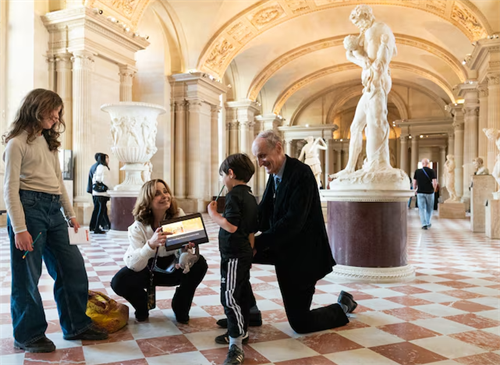
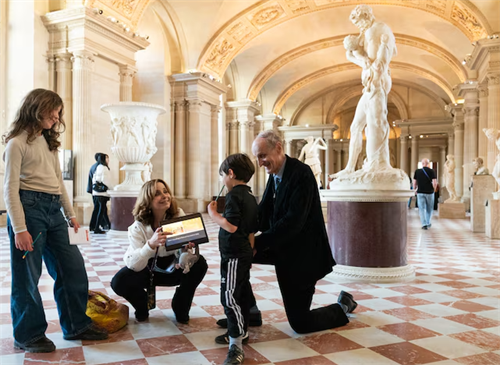
Forget everything you think you know about dragging weary children through hallowed museum halls. The Louvre, with its 73,000 square meters of history, is not a test of endurance to be survived, but a legendary treasure island waiting to be explored. The key lies not in what you see, but in how you see it. This guide is not a simple list of exhibits. It is a strategic blueprint and a mindset shift—transforming a potentially overwhelming day into an engaging family quest where the prize is wonder itself. We'll move beyond the "what" to the "how": how to plan a route that saves hours, how to find the quietest entrance, how to look at a masterpiece so it captivates a child's imagination, and how to leave not with tired feet and frazzled nerves, but with shared stories of discovery.
Part 1: Mission Preparation—The Adventure Begins at Home
1.1 Mental & Knowledge Readiness (The "Briefing")
Story Time is Key: Don't present facts; tell stories. Before you go, introduce the "treasures" through their legends.
For Venus de Milo, talk about the goddess of love and beauty, and the mystery of her missing arms. What could she have been holding?
For Winged Victory, describe her as a magnificent goddess standing on the prow of a warship, guiding sailors through stormy seas.
For Mona Lisa, frame her as the world's most famous, most mysterious lady. Why is she smiling? What secret is she keeping?
Use children's books, short documentaries, or even imaginative storytelling. The artifact becomes a character they are eager to meet.
Define the "Treasure Hunt" Mission: Collaborate with your kids. Give the day a goal beyond "looking at art." Perhaps: "Today, we are agents on a mission to find three immortal goddesses" or "We are detectives searching for clues in paintings from Napoleon's time." This creates a powerful, shared narrative.
Manage Expectations: Be honest. "The Louvre is a giant palace of treasures. We can't find them all in one day, and that's okay. Our mission is to find our key treasures and have fun doing it." This relieves the pressure on you and them.
1.2 Tickets & Timing Strategy (Your Tactical Advantage)
The Golden Rule: Book Online with a Time Slot for the Pyramid Entrance. This is non-negotiable. Walk-up tickets mean queues that can devour 2-3 hours of your family's patience. The timed entry via the Pyramid is your express lane. Purchase directly from the official Louvre website. While the Paris Museum Pass allows entry, it often requires you to join a separate (shorter, but still existing) line to get your physical ticket validated. For families, the absolute certainty of a Pyramid time slot is worth the direct purchase.
The "Reverse Itinerary" Timing Secret: The classic advice is to arrive first thing in the morning. A more strategic, family-friendly alternative is the Wednesday or Friday late opening (the Louvre closes at 9:45 PM). The crowds thin dramatically after 6:00 PM. The atmosphere is calmer, and the museum takes on a magical, quiet quality. For a daytime visit, a slot just after lunch (e.g., 1:00 PM) can also work, as morning tour groups are beginning to leave.
The "Secret" Entrance – Your First Win: Everyone sees the Pyramid. Everyone queues there. Your family will be smarter. Your entrance is the Carrousel du Louvre. This is a shopping mall accessed from 99 Rue de Rivoli or directly from the Palais Royal-Musée du Louvre metro station. Walk through the mall (past the inverted pyramid) and you'll find the museum's ticket hall. You will bypass the vast majority of the external queue. Arriving already ahead of the crowd is a massive psychological win.
1.3 The Essential Packing List (Field Gear)
Comfort First: Unbreakable rule: everyone wears their most comfortable, already-broken-in walking shoes.
Sensory Management: The Louvre can be cavernous and echoey. For sensitive children, consider lightweight noise-reducing headphones. They are a game-changer for focus and calm.
Sustenance: Pack refillable water bottles and silent, high-energy snacks (granola bars, dried fruit). The quest must be fueled.
Mission Toolkit: Download the excellent Louvre Official App and save your "targets" offline. Bring a small sketchbook and pencils (pens are often prohibited). Encouraging a quick sketch is infinitely more engaging than a snapshot. Finally, prepare your physical "Treasure Map" cards with clues or pictures of the items on your mission list.
Part 2: Core Expedition—Navigating the Treasure Trove
This is your 2.5 to 3-hour master plan. The philosophy is "Go Deep, Not Wide." We target the densest cluster of iconic and engaging art.
2.1 The Master Route: A Logical, Flowing Path
Starting Point: Enter via the Carrousel du Louvre, collect tickets, and ascend into the museum. Head first to the Sully Wing.
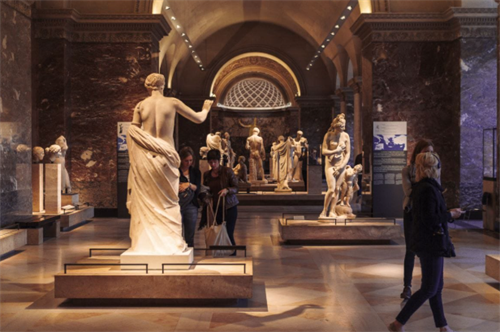
-Treasure 1: Venus de Milo (Sully, Room 346, Ground Floor). Why start here? She stands in a relatively open room, offering a dramatic and awe-inspiring "first encounter." She's also less mobbed than the later stops. Engagement Tip: Walk a full circle around her. Ask: "From the side, what letter does her body shape remind you of? (An 'S'). How do you think she lost her arms?"
The Transition: From Venus, follow signs for the Denon Wing. You'll traverse the stunning Roman Antiquities gallery, a grand hallway that feels like a warm-up.
-Treasure 2: Winged Victory of Samothrace (Denon, Staircase, Level 1). Ascend the Daru staircase and behold her dramatic landing at the top. Unique Perspective: Walk down to the base of the stairs and look up. This low angle makes her wings and powerful posture even more breathtaking. Question for the kids: "She's on a stone ship. Can you feel the wind in her robes? Is she landing or taking off?"
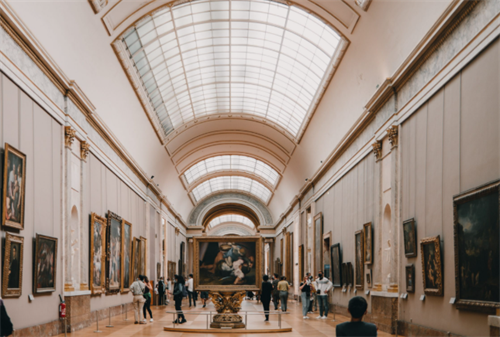
-Treasure 3: Mona Lisa (Denon, Room 711, Level 1). Now, the elephant in the room. Manage expectations: "She is smaller than you think, behind thick glass, and always has a crowd. Our job is to get our glimpse and solve her smile mystery." Critical Tactical Move: Do not approach her head-on from the long gallery. Instead, after seeing Winged Victory, enter the Grand Galerie (the long picture gallery) and walk about two-thirds of the way down. The Mona Lisa is in a side room to the right (Room 711). Approach from this side entrance; the queue is often shorter. The Photographer's Secret: The classic shot is a crowded selfie. For a more iconic—and less crowded—photo, stand at a 45-degree angle to the painting. With a good zoom, you can capture Mona Lisa, a slice of the eager crowd, and the magnificent, vaulted ceiling of her gallery, which is a masterpiece in itself. This tells the full story.
-The Grand Galerie "Hunt": Now, use the endless wonders of the Grand Galerie for your active treasure hunt. Look for the colossal "Wedding Feast at Cana" (opposite Mona Lisa, perfect for "I Spy" detail-spotting), "The Coronation of Napoleon" by David (Room 702, full of glorious pageantry to dissect), and "The Raft of the Medusa" by Géricault (Room 700, a dramatic and harrowing tale of shipwreck).
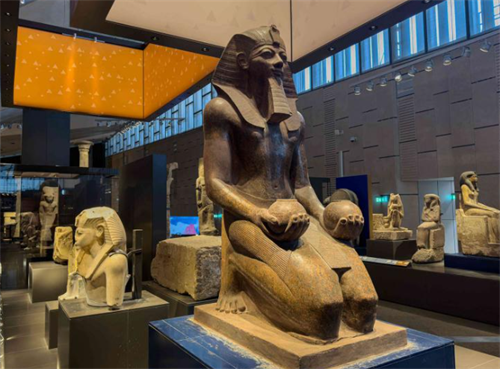
The Flexible Finale: Your energy gauge is key. Option A (High Energy): Dive into the Napoleon III Apartments (Richelieu Wing, Level 1)—a breathtakingly opulent palace within the palace that feels like walking into a film set. Option B (Need Calm): Seek out the Code of Hammurabi (Richelieu, Room 227, Ground Floor)—an ancient stone law book. Or, simply retreat to the café under the Pyramid for a well-earned drink.
2.2 Making Masterpieces Interactive: The "Guide" Toolkit
The "Three Question" Technique: For any artwork, ask: 1) "What do you see?" (Literal observation), 2) "What's happening?" (Story/narrative), 3) "How does it make you feel or what does it remind you of?" (Personal connection).
The Sketch Challenge: Find a bench. Set a 5-minute timer. Everyone tries to capture the basic shapes of a statue or painting. The result doesn't matter; the act of deep looking does.
Tech Aid: Use the Louvre app's audio guide. Let the kids hold the phone and press play on the highlights. The act of control is engaging.
Part 3: Resupply & R&R—Oases for Refueling
In-Museum Options:
Café Mollien (Denon, Level 1): Offers good views over the Pyramid and a classic café atmosphere for a pastry or sandwich.
Café Richelieu (Richelieu, Level 1): Similar vibe, slightly less crowded.
The Under-Pyramid Cafeteria: More food-court style, with the quickest service and the most seating. The glass pyramid overhead provides a unique, light-filled environment.
Pro Parent Tip: The most flexible and cost-effective option is to pack sandwiches and eat them on the benches in the Tuileries Garden just outside (weather permitting). The change of scenery and fresh air are invaluable.
Nearby Family-Friendly Bite: For a post-museum early dinner, venture to the Saint-Germain-l'Auxerrois area just east of the Louvre. Look for brasseries with prix-fixe (set menu) options. Le Café Molière or Le Louvre Bistro offer reliable, classic French fare in a bustling but welcoming setting.
Part 4: Pitfall Avoidance & Civilized Exploration
The 90-Minute Rule: Plan for a 15-minute break (bathroom, water, sit-down) for every 90 minutes of movement. The Louvre's benches are strategic rest stops.
Key Bathroom Locations: The busiest are near the major works. Quieter ones can often be found on the lower levels (-1) of each wing or in the less-trafficked transitional halls between wings.
Security & Awareness: Keep bags in front of you in dense crowds (especially the Mona Lisa room). It's common sense, not paranoia.
Avoiding "Lost in the Labyrinth": Remember the three wings: Richelieu (north), Sully (east), Denon (south). The Pyramid is your central, unfailing landmark. The museum's color-coded signage is excellent—use it.
Gift Shop Strategy: The largest shop is under the Pyramid in the Hall Napoléon. However, smaller boutiques near exits (like in the Carrousel du Louvre) often have a good selection with fewer people. Consider a postcard or a replica statue as a tangible memory of your "found treasure."
Family-Friendly Etiquette: Frame rules positively: "We use our indoor explorer voices so others can listen to their thoughts." "We look with our eyes, not our hands, to keep the treasures safe for the next explorers." Explain that no flash photography is like not shining a bright light in a sleeping person's eyes—it protects the art.
Part 5: The Quick-Draw Mission Checklist
Best Entrance: Carrousel du Louvre (99 Rue de Rivoli or via Métro).
Must-Have Ticket: Online timed-entry ticket for the Pyramid, booked in advance.
Core Route: Sully (Venus) → Denon (Winged Victory → Mona Lisa via side approach → Grand Galerie hunt).
Essential App: "Louvre Official" for offline maps & audio.
Kid-Kit: Stories/mission, snacks, sketchbook, comfy shoes, noise-canceling option.
Key Break Spots: Café Mollien, Pyramid benches, Tuileries Garden.
Safety Reminder: Bags in front in crowds. All practical information (hours, ticket prices, entrance protocols) should be double-checked on the official Louvre website before your departure.
Walking back out into the Parisian light, the real treasure you take from the Louvre isn't a checklist of artworks seen. It's the memory of your child's face lit up with recognition upon finding a statue they'd only heard in a story. It's the shared joke about Mona Lisa's secret, or the proud scribbled sketch in a notebook. You haven't just visited a museum; you've completed a family adventure, equipped with a "treasure hunting" mindset you can use in any city, any gallery, anywhere. You've shown them that history isn't a dull fact, but a living, breathing story—and they just played a part in it.
Recommended for you: