


Nordic Fjords and Viking Culture: A Family Journey Through Ice-Carved Landscapes and Living Legends
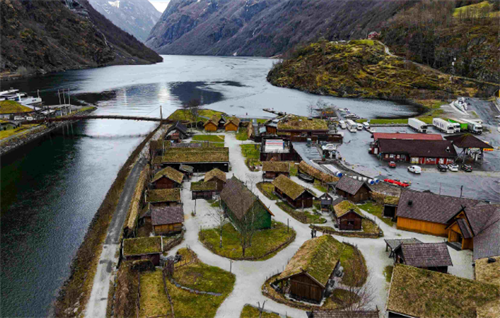
The first thing most children notice on a Norwegian fjord cruise is not the mountains or the waterfalls—it’s the silence. The engine hum fades beneath towering cliffs, and suddenly the world feels bigger than it did a moment ago. Parents often reach for their phones. Children just stare. That pause—rare in modern family travel—is where Norway begins to teach.
For families, the Nordic fjords and Viking heritage are often marketed as separate attractions: nature on one side, museums on the other. In reality, they are inseparable. Fjords shaped how Vikings lived, traveled, traded, worshipped, and imagined the world. And Viking culture, in turn, explains why these dramatic waterways still feel inhabited rather than staged.
Why Fjords and Vikings Belong in the Same Family Story
A fjord is not just a scenic inlet. It is a geological record written in ice and time. Norwegian fjords were carved by glaciers over multiple ice ages, acting like slow-moving sandpaper that deepened valleys far below sea level before retreating around 12,000 years ago. When the ice melted, seawater flooded these U-shaped valleys, creating the fjords we see today—some more than 1,300 meters deep, like Sognefjord, the longest and deepest fjord in Norway (Norwegian Geological Survey, 2020).
For Viking communities, these fjords were not obstacles but highways. The Old Norse word fjord means “a place used for passage and ferrying,” and water—not roads—was the primary infrastructure of Viking life. Families who grasp this quickly understand why Viking ships were narrow, flexible, and shallow-drafted, and why settlements clustered near sheltered fjord arms rather than open coastlines.
This connection matters for children. When they stand on a cruise deck watching waterfalls plunge straight into emerald water—colored green by glacial melt carrying fine rock particles—they are seeing the same forces that shaped Viking trade routes, farming choices, and even mythology.
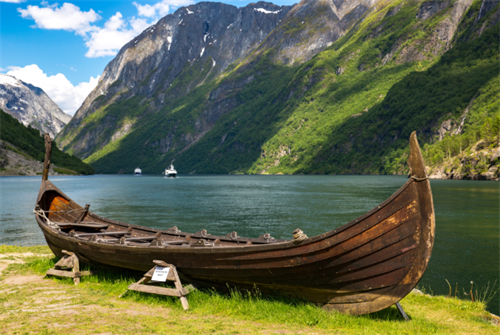
Planning a Family Fjord Cruise: Choosing Meaning Over Mileage
-Choosing the Right Fjord for Families
Not all fjords offer the same experience, and families benefit most from choosing routes that balance visual drama with cultural depth.
Nærøyfjord (UNESCO World Heritage Site): Narrow, intimate, and historically rich. Near Gudvangen, where families can visit Njardarheimr Viking Village, this fjord offers a rare combination of natural beauty and living history.
Geirangerfjord (UNESCO World Heritage Site): Often called the “Jewel of the Fjords,” known for waterfalls like the Seven Sisters and abandoned cliff farms such as Skageflå, which illustrate how humans adapted to extreme landscapes.
Sognefjord: Vast and varied, branching into over 30 fjord arms. Ideal for families who want to combine cruises with glacier visits near Jostedalsbreen, mainland Europe’s largest glacier.
A common family mistake is trying to “see them all.” In practice, one fjord experienced deeply is more valuable than three seen briefly.
-Onboard Life: Practical Family Considerations
Modern fjord cruises are remarkably family-friendly, but comfort depends on preparation:
Cabins: Mid-ship cabins reduce motion, especially helpful for younger children.
Seasickness: Fjords are calmer than open sea, but ginger chews, acupressure bands, and regular deck time help.
Learning moments: Many cruises offer commentary on geology and history. Parents who preview one or two facts—like how glaciers erode below sea level—find children listen more actively.
One family traveling with children aged 7 and 11 told me their breakthrough moment came during rain. Waterfalls multiplied instantly, and the guide explained that rain amplifies fjord beauty. The children stopped complaining about wet jackets and started counting waterfalls.
Viking History Beyond the Myths: What Families Often Get Wrong
Before stepping into a Viking museum, it helps to clear away some myths—especially for children raised on movies and cartoons.
-Vikings Were Not Just Raiders
The word “Viking” originally described an activity—raiding—not a people. Most Vikings were farmers, traders, and craftspeople. Archaeological evidence shows extensive trade networks reaching as far as Constantinople and Baghdad, exchanging furs, amber, and iron for silks and spices (Brink & Price, 2008).
This reframing is powerful for children. Suddenly, Vikings are not one-dimensional warriors but adaptable problem-solvers navigating harsh environments.
-Hygiene and Daily Life
Contrary to popular belief, Vikings were notably hygienic for their time. Excavations have uncovered combs, tweezers, razors, and evidence of weekly bathing—remarkably frequent by medieval standards. Sharing this with children often produces disbelief, followed by curiosity: “Why did people think they were dirty?”
Because history is often written by victims, Viking reputations were shaped by those they raided, not by those who lived alongside them.
-The Truth About Horned Helmets
Horned helmets are a 19th-century invention, popularized by romantic painters and opera costumes. The few authentic Viking helmets found are hornless, designed for practicality, not drama. Explaining this helps children learn an early lesson in historical interpretation versus popular culture.
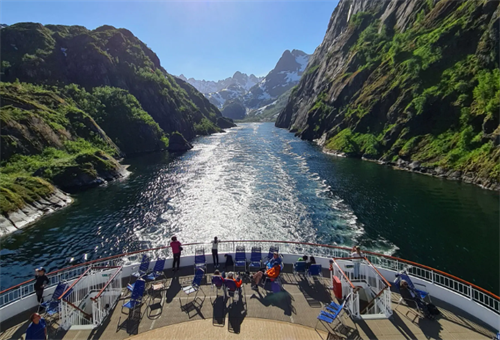
Viking Ship Museums: Where Engineering Meets Imagination
-Viking Ship Museum, Oslo
Seeing the Oseberg and Gokstad ships in person changes how families understand scale and skill. These ships were buried as part of funerary rituals, reflecting the Viking belief that boats carried the dead safely to the afterlife—especially for high-status individuals.
-Parents can guide children to notice:
The flexible clinker-built planks that allowed ships to bend with waves.
The shallow keels that made fjord navigation and beach landings possible.
The symmetry that balanced speed and stability.
One family I observed asked their children to imagine rowing for days without modern navigation. The discussion quickly turned to teamwork, leadership, and endurance—far more impactful than memorizing dates.
Folk Villages and Living History: Learning With the Body
-Njardarheimr Viking Village, Gudvangen
Set deep within Nærøyfjord, Njardarheimr is not a theme park. It is a reconstructed settlement where interpreters live daily Viking life—cooking, forging, weaving, and storytelling.
For families, the value lies in participation:
Children grind grain or try simple woodworking.
Stories are told orally, echoing how Viking history was preserved before writing.
Myths of Odin, Thor, and Freya are explained as frameworks for understanding nature, not fantasy entertainment.
This context helps children grasp why fjords, storms, and mountains were personified as giants, gods, and spirits—like the Jötnar of Jotunheimen, whose “home of the giants” still names Norway’s largest mountain range.
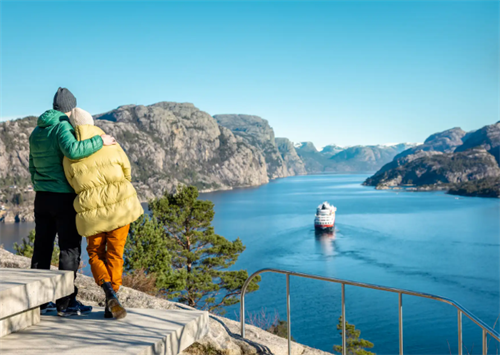
Fjords as Myth Landscapes: When Geography Becomes Story
Viking mythology did not arise in abstraction. It grew directly from landscape.
In Norse cosmology, the Earth was formed from a giant’s body—his bones becoming mountains, his blood the sea. When families cruise through fjords like Geiranger or Lysefjord, where cliffs rise vertically and weather shifts rapidly, these myths suddenly feel less metaphorical.
Even darker folklore—like the water spirit nøkken, said to lure children toward lakes—served a practical purpose: explaining accidents and teaching caution near dangerous waters.
Sharing these stories responsibly gives children cultural context without fear.
Practical Family Itinerary: A Balanced Four-Day Experience
Day 1: Arrival in Bergen or Oslo, gentle city walk, Viking Ship Museum visit.
Day 2: Fjord cruise through Nærøyfjord, onboard learning, evening storytelling.
Day 3: Visit Njardarheimr Viking Village, short hike to fjord viewpoint.
Day 4: Optional glacier museum near Sognefjord or folk museum, departure.
Rule of thumb: one major experience per day. If children still ask questions at dinner, the pacing is right.
Safety, Comfort, and Budget Realities
Weather: Layering is essential. Fjord weather changes quickly.
Footwear: Non-slip shoes matter more than brand-name jackets.
Budget: Fjord cruises and museums offer high educational return per cost, especially compared to theme parks.
Families rarely return from Norway talking about “attractions.” They talk about silence between cliffs, about ships built without nails, about stories that made sense once they saw the landscape that inspired them.The fjords teach scale. Viking culture teaches adaptation. Together, they teach families how humans belong to places—not as conquerors, but as participants.In a world that rushes, Norway invites families to slow down, look longer, and listen—to water, stone, and stories carried for over a thousand years.
References:
[1]Brink, S., & Price, N. (2008). The Viking world. Routledge.
Norwegian Geological Survey. (2020). Fjords of Norway: Formation and geology. https://www.ngu.no
[2]Norwegian Directorate for Cultural Heritage. (2021). Viking heritage sites in Norway. https://www.riksantikvaren.no
[3]UNESCO World Heritage Centre. (2023). West Norwegian fjords – Geirangerfjord and Nærøyfjord. https://whc.unesco.org
Recommended for you: