


Quebec City Family Program: Riding on horseback, walking along the city walls, learning "slow history" in the homeland of North American French language
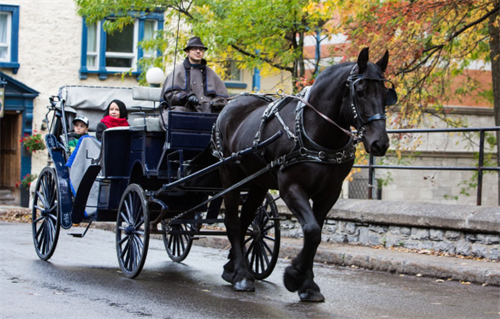
The first thing most children notice in Quebec City is not the language, the architecture, or even the famous Château Frontenac. It is the sound. The rhythmic clip-clop of horses on cobblestone streets, the echo of French conversation drifting through stone corridors, and the hush that settles over Old Québec as evening lights glow against 400-year-old walls.
For families accustomed to fast-paced sightseeing, Quebec City offers something increasingly rare: a place where history is not rushed, where walking is the main mode of discovery, and where culture is absorbed through movement, taste, and storytelling rather than screens. As the oldest French-speaking city in North America and the only fortified city north of Mexico, Quebec City is not simply “European-looking.” It is structurally European in how it invites families to slow down, observe, and engage together (UNESCO, 1985).
Understanding Old Québec: Why This City Works So Well for Families
Old Québec’s compact design is its greatest gift to families. Unlike sprawling North American cities that demand constant transport planning, Upper Town (Haute-Ville) and Lower Town (Basse-Ville) are walkable, visually engaging, and naturally segmented into short exploration loops. Children rarely feel overwhelmed because every turn offers something tangible: murals, staircases, cannons, horses, or street performers.
Quebec City’s French identity also functions differently from Europe. Here, French is not a tourist performance but the default language of daily life. Yet English is widely spoken, which creates a uniquely safe environment for children to experiment linguistically. Many families find their children confidently ordering pastries or greeting shopkeepers within a day or two, an organic form of language immersion rarely achieved on traditional trips.
Riding Through History: Why a Calèche Ride Is More Than a Tourist Attraction
-A Moving Classroom on Cobblestones
Among all family experiences in Old Québec, a horse-drawn calèche ride stands out as one of the most effective ways to introduce children to the city’s layered history. Offered by Calèches Québec, these rides are not rushed loops designed only for photos. They are guided narrative journeys, where skilled drivers explain how geography, trade, religion, and conflict shaped the city (Calèches Québec, 2018).
Families often underestimate how powerful this experience is for children. From the elevated seating of the carriage, kids see the city differently—doors, fortifications, and streets suddenly make sense as connected systems rather than isolated landmarks.
-Case Insight: The “Upper Town Express” Experience
One of the most family-friendly routes is the Upper Town Express, a roughly 60-minute ride that balances storytelling with comfort. The calèches are well-maintained, equipped with retractable roofs and blankets, making them suitable even in cooler weather. Drivers dress traditionally and manage horses calmly, which reassures younger children.
What truly distinguishes the experience, however, is the guide. Parents consistently report that the guide’s ability to animate history—describing prison cells at Morrin Centre, the symbolism of the Price Building as Quebec’s first “skyscraper,” or the strategic importance of Porte Saint-Louis—keeps children engaged far longer than expected.
Rather than hopping off repeatedly, families absorb the city as a continuous story, which later makes walking tours more meaningful.
Walking Old Québec: Why Feet Matter More Than Wheels
-Guided Walking Tours: Context Before Convenience
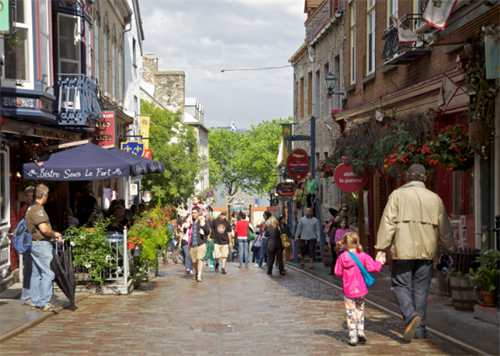
Quebec City is often described as “best explored on foot,” but for families, how you walk matters as much as where. Guided walking tours provide crucial context that turns wandering into understanding. Tours led by historians or costumed interpreters—such as those by Cicérone Tours or Québec 1608—transform streets into narrative spaces rather than backdrops (Dionne, 2025).
For families with older children or teenagers, themed tours—women in history, military strategy, or even ghost tours—are particularly effective at sustaining attention without simplifying content.
-Self-Guided Exploration That Still Teaches
Self-guided walks work exceptionally well in Old Québec because signage is clear and distances are manageable. Many families use informal “missions” rather than strict itineraries: spotting every mural, counting staircases, or following wall segments. Tools like GeoRallies at Îlot des Palais, which combine GPS navigation with puzzle solving, turn history into an interactive game even skeptical teens enjoy (Dionne, 2025).
The Ancient City Walls: Teaching Strategy, Not Just History
Walking along Quebec City’s fortifications offers families a rare opportunity to physically understand military logic. Children can see how elevation, visibility, and choke points determined survival. Guided tours of the ramparts or Citadel often frame these lessons through storytelling rather than dates, helping children grasp why the city looks the way it does.
The Citadel of Quebec, still an active military installation, adds another layer of realism. Watching the Changing of the Guard in summer or exploring the Royal 22nd Regiment Museum allows children to connect past defense strategies with modern continuity.
Old Québec’s Most Engaging Streets and Squares for Families:
-Petit Champlain and Place Royale
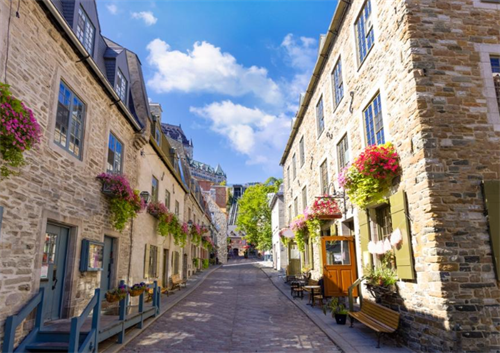
Rue du Petit Champlain consistently captivates families because it feels human-scaled. Its boutiques, galleries, and cafés invite browsing rather than consumption. Parents appreciate that traffic is limited, while children are drawn to window displays and street art.
Nearby, Place Royale functions as an open-air history book. Standing where Samuel de Champlain founded the city in 1608, families often pause longer than expected. The modest scale of Notre-Dame-des-Victoires, the oldest stone church in North America, encourages quiet curiosity rather than awe fatigue.
-Murals as Storytelling Tools
The Fresque des Québécois mural, depicting 400 years of history, works exceptionally well as a family teaching moment. Parents can turn it into a visual timeline, asking children to identify clothing changes, professions, or architectural shifts. Unlike museums, murals invite discussion without rules.
Food as Cultural Education: Eating French-Canadian with Kids
Quebec City’s food scene is a cultural bridge rather than a challenge for families. Dishes like poutine, tourtière, maple desserts, and fresh pastries balance familiarity with novelty. Restaurants such as La Bûche or Lapin Sauté offer hearty, approachable menus that introduce tradition without overwhelming younger palates.
Markets like Marché du Vieux-Port encourage tasting rather than full meals, which suits children’s attention spans. Many parents find that letting children choose small items—cheese cubes, jams, pastries—creates ownership and curiosity around local food.
Beyond the Old Town: Nature as a Counterbalance
-Montmorency Falls: Scale and Sensation
Located just 12 km from the city, Montmorency Falls offers families a dramatic shift from urban exploration. Taller than Niagara Falls, it provides a sensory experience children remember vividly: mist, vibration, and sound. The cable car system allows families to manage exertion levels, while the suspension bridge creates a controlled thrill that feels adventurous but safe.
-Parks and Seasonal Play
The Plains of Abraham, once a battlefield, now function as Quebec City’s communal backyard. Summer picnics, winter skating, and open green spaces allow families to decompress between structured activities.
Practical Family Logistics That Matter:
Quebec City is unusually forgiving for family travelers. Public transportation is reliable, walking distances are short, and emergency services are accessible. Families arriving by car are best advised to park once and walk, as Old Québec’s layout rewards pedestrians.
Language rarely poses a barrier, but encouraging children to try basic French phrases often results in warmer interactions. Quebecers respond generously to effort, especially from young visitors.
Quebec City does not entertain families by overwhelming them. It invites them to participate. A calèche ride teaches patience and listening. City walls teach strategy and perspective. Markets teach taste and choice. And walking—slow, deliberate walking—teaches attention.For children, this may be their first experience of a place where history is not behind glass, where another language is lived rather than translated, and where time feels layered instead of linear. For parents, Quebec City offers the rare satisfaction of a trip that is simultaneously educational, restful, and deeply memorable.
References:
[1]Calèches Québec. (2018). Taking a calèche ride through historical Quebec City. https://www.calechesquebec.com
[2]Dionne, É. (2025). Walking tours in Québec City. Québec Tourism.
[3]UNESCO. (1985). Historic district of Old Québec. UNESCO World Heritage Centre.
[4]Ville de Québec. (2024). Musée de la civilisation & heritage resources. https://www.mcq.org
[5]Québec Tourism Board. (2025). Old Québec visitor guide. https://www.quebec-cite.com
Recommended for you: