


Lhasa Family Adaptability Guide: Practical Tips for Visiting the Potala Palace and Barkhor Street with Kids
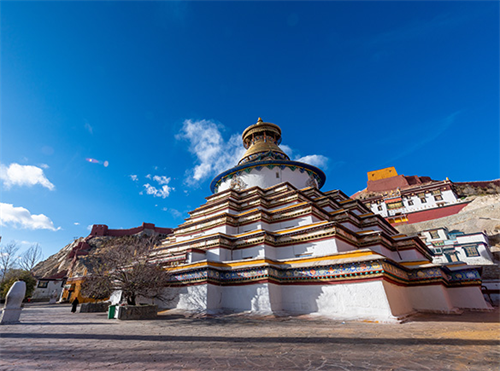
Bringing children to Lhasa is often framed as an act of bravery, as if parents are deliberately choosing difficulty over comfort. In reality, the challenge of Lhasa is not danger, but adaptation. At nearly 3,650 meters above sea level, the city quietly forces families to move differently, breathe differently, and think differently about what a “successful” trip looks like.
For children, this shift can feel disorienting at first. Their legs tire faster on stairs, their moods fluctuate more easily, and their curiosity competes with physical limits they have never encountered before. Yet it is precisely this unfamiliarity that gives Lhasa its educational power. When parents resist the urge to rush and instead let the city set the pace, children often rise to the experience with surprising resilience.
Understanding Lhasa Through a Family Perspective:
-Altitude as a Daily Condition, Not a One-Time Obstacle
Altitude is the single most important factor shaping a family trip to Lhasa, yet it is often misunderstood. Acute mountain sickness does not announce itself dramatically in most children. Instead, it appears subtly: reduced appetite, unusual quietness, irritability, or a desire to be carried long past the age when that is typical. Medical research shows that children are not more susceptible to altitude illness than adults, but they are less likely to articulate discomfort clearly, which places greater responsibility on parents to observe behavior closely (Hackett & Roach, 2001).
Successful families treat altitude not as a hurdle to “get over” on the first day, but as a condition that influences every decision. Shorter outings, slower walking speeds, and generous rest periods are not signs of failure; they are the foundation of a sustainable itinerary. When parents accept this early, the entire trip becomes calmer.
-Cultural Density and Sensory Overload
Lhasa is not visually overwhelming in the way megacities are, but it is culturally dense. Prayer chants echo through streets, incense smoke lingers in the air, pilgrims prostrate themselves repeatedly along sacred routes, and religious symbols appear everywhere. For children accustomed to structured attractions, this constant symbolic presence can feel intense.
Rather than trying to explain everything, families often do better by letting children observe first. Curiosity emerges naturally when children are not pressured to understand immediately. Over time, patterns begin to form, and questions follow. This organic learning is far more effective than forced explanations.
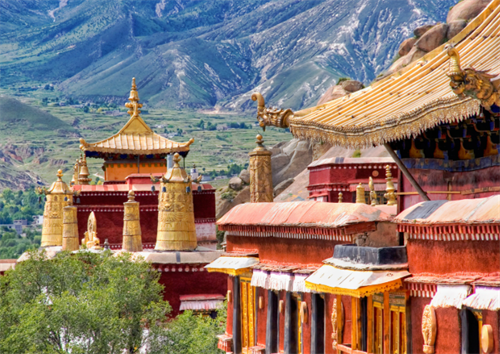
Arrival and Acclimatization: Setting the Tone for the Entire Trip
-Why the First 24 Hours Determine Success
The first day in Lhasa carries disproportionate weight. Many families sabotage their trip by treating arrival day as an opportunity to “at least do something.” In reality, the World Health Organization and high-altitude medicine guidelines consistently emphasize rest and minimal exertion during the first 24 hours at altitude (World Health Organization, 2014).
For children, whose bodies are adjusting silently, this caution is even more important. A calm arrival day that prioritizes hydration, light meals, and familiar routines often prevents symptoms that could otherwise derail the following days.
-Helping Children Adjust Without Anxiety
Parents set the emotional tone. When adults treat rest as intentional rather than inconvenient, children mirror that mindset. A short, flat walk near the hotel in the late afternoon can help orient children without overtaxing them. Warm drinks, quiet conversation, and early sleep reinforce the message that adaptation is part of the adventure, not a delay.
Visiting the Potala Palace with Children:
-Understanding Why the Potala Palace Feels So Demanding
The Potala Palace is visually imposing, but its real challenge lies in its physical design. Built into a hillside, it requires sustained climbing, often on uneven steps, with limited oxygen and no opportunity to exit once inside. Entry times are tightly controlled, and visits are intentionally brief to protect the structure, which UNESCO recognizes as a site of exceptional cultural importance (UNESCO, 2023).
For children, the palace can feel endless if approached without preparation. Families who struggle most are those who expect children to maintain adult pace and attention throughout the visit.
-Preparing Children Mentally Before the Visit
Children cope better with difficulty when they understand its purpose. Explaining that the palace was built high to symbolize closeness to the spiritual world gives meaning to the climb. Framing the visit as a journey rather than a test reduces resistance. When children know that moving slowly is expected, they stop interpreting fatigue as failure.
Morning visits are essential. Oxygen levels are slightly higher, crowds are thinner, and children tend to have more energy. Booking the earliest available time slot is one of the most effective decisions families can make.
-Moving Through the Palace Without Exhausting Children
Inside the Potala Palace, the key is intentional slowness. Pausing at landings should not feel like stopping; it should feel like part of the experience. Short stories about murals or statues give children something to focus on while they recover their breath. Because photography is prohibited, children often engage more deeply with visual details, which paradoxically reduces complaints about physical effort.
Families who approach the palace as a shared challenge, rather than an attraction to “complete,” often find that children leave feeling proud rather than relieved.
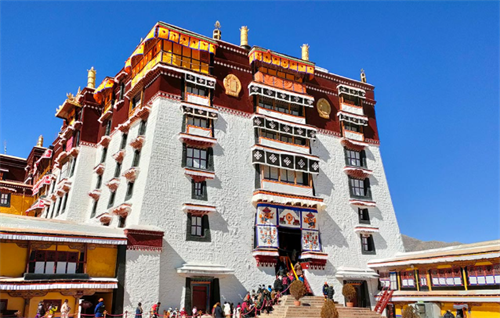
Barkhor Street as a Living Cultural Classroom:
-Why Barkhor Street Feels Overwhelming to Children
Barkhor Street is not a market designed for visitors; it is a pilgrimage route that has functioned for centuries. Pilgrims move clockwise, some chanting, others prostrating themselves repeatedly. Vendors sell religious items alongside daily necessities. The movement never truly stops.
For children, this constant flow can be disorienting. The mistake many families make is attempting to walk the entire circuit in one continuous loop, which quickly leads to sensory fatigue.
-Letting Barkhor Unfold in Segments
Families who succeed on Barkhor treat it as a series of short encounters rather than a single experience. Walking one section, pausing for tea, and then deciding whether to continue gives children a sense of control. Simple observational challenges—spotting prayer wheels or noticing clothing patterns—help transform chaos into curiosity.
When parents remain flexible and willing to turn back early, Barkhor becomes one of the most memorable parts of the trip rather than the most exhausting.
Food, Hydration, and Energy Management at High Altitude:
-How Children Respond to Tibetan Food
Tibetan cuisine is often described as heavy, but many dishes are well suited to children when chosen carefully. Steamed dumplings, noodle soups, and rice-based meals provide energy without overwhelming digestion. In the first few days, smaller portions served more frequently tend to work better than large meals.
Altitude slows digestion, and forcing children to eat unfamiliar foods can increase discomfort. Allowing them to eat lightly at first usually leads to better appetite as acclimatization improves (Basnyat & Murdoch, 2003).
-Hydration as Preventive Care
Dry air and altitude increase fluid loss, yet children rarely feel thirsty enough. Gentle reminders and warm drinks are often more effective than insisting on cold water. Proper hydration significantly reduces the risk of altitude-related headaches and fatigue, as emphasized in CDC travel health guidance (Centers for Disease Control and Prevention, 2024).
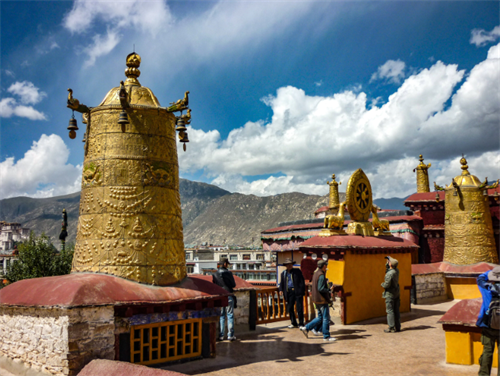
Sleep, Rhythm, and Emotional Balance:
-Why Sleep Feels Different in Lhasa
Many children experience lighter sleep during the first nights at altitude. This is normal and usually resolves within a few days. Maintaining familiar bedtime routines helps signal safety and continuity, which supports both emotional and physical adjustment.
Avoiding overstimulation in the evening is particularly important. Quiet activities and early bedtimes contribute more to acclimatization than any supplement or remedy.
-Emotional Ups and Downs as Part of Adaptation
Mood swings are common in high-altitude environments. Rather than interpreting irritability as misbehavior, parents who view it as a physiological response are better able to respond calmly. Children who feel understood adapt more quickly.
Health, Safety, and Realistic Expectations:
-Age Considerations for Family Travel to Lhasa
Pediatric travel medicine generally advises against high-altitude travel for children under three years old. For children aged three to seven, trips should be conservative and limited to Lhasa itself. Older children tend to adapt more easily and retain cultural learning more deeply (Hackett & Roach, 2001).
Knowing these boundaries helps parents make informed decisions rather than relying on optimism alone.
-Knowing When to Stop
Parents must be prepared to pause or seek medical help if symptoms worsen. Persistent vomiting, severe headache, or unusual lethargy are signals to descend or consult a doctor immediately. Most families never reach this point, but preparedness reduces anxiety.
Why Lhasa Leaves a Lasting Impression on Children:
Children may not remember historical dates or architectural terms, but they remember sensations: thin air, slow walking, spinning prayer wheels, warm tea after a long climb. Educational research shows that immersive experiences during childhood foster long-term empathy and curiosity far more effectively than passive learning (Kolb, 2015).
Lhasa offers this immersion naturally. It does not entertain children; it invites them to observe, adapt, and participate.
Lhasa does not reward efficiency. It rewards attentiveness. Families who let go of rigid itineraries often discover that their children become more observant, more patient, and more resilient than expected. The Potala Palace teaches persistence through its climb, while Barkhor Street teaches respect through its rhythm.In the end, traveling to Lhasa with children is not about proving that it can be done. It is about learning, together, how to move through the world with humility and care. Long after the altitude is forgotten, that lesson remains.
References:
[1]Basnyat, B., & Murdoch, D. R. (2003). High-altitude illness. The Lancet, 361(9373), 1967–1974. https://doi.org/10.1016/S0140-6736(03)13591-X
[2]Centers for Disease Control and Prevention. (2024). High-altitude travel & altitude illness. CDC Yellow Book.
[3]Hackett, P. H., & Roach, R. C. (2001). High-altitude illness. New England Journal of Medicine, 345(2), 107–114. https://doi.org/10.1056/NEJM200107123450206
[4]Kolb, D. A. (2015). Experiential learning: Experience as the source of learning and development (2nd ed.). Pearson Education.
[5]UNESCO. (2023). Historic ensemble of the Potala Palace, Lhasa. UNESCO World Heritage Centre.
Recommended for you: