


Peru Machu Picchu Family Hiking Guide: An Alternative Route for Children on the Inca Trail and Tips for Preventing Altitude Sickness
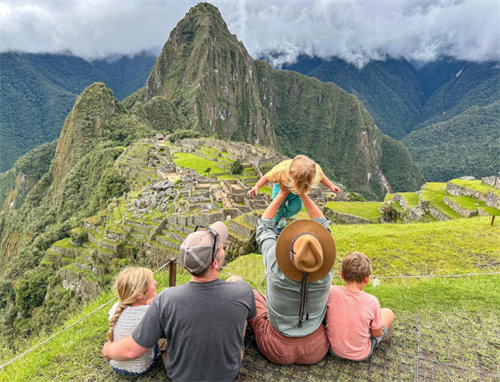
There is a moment on the Inca Trail—often somewhere between the cloud forest and the first ancient stone terraces—when the noise of modern life finally drops away. The air thins, the trail narrows, and the mountains seem to lean in, as if testing whether you are truly paying attention. For adults, this moment feels like adventure. For children, it can feel like wonder—or discomfort—depending entirely on how the journey has been designed.
As someone who has walked the Sacred Valley repeatedly, studied its routes, and watched families either flourish or struggle on these trails, I can say with confidence: Machu Picchu is not inherently difficult for children. What makes it challenging is the default way most people attempt it.
The Sacred Valley: Geography, Meaning, and Why It Matters for Families
The Sacred Valley stretches through southeastern Peru, carved by the Urubamba River as it winds between Cusco and Machu Picchu. To the Incas, this river mirrored the Milky Way above, creating a sacred symmetry between earth and sky. To modern travelers, it is a corridor of fertile land, dramatic elevation shifts, and microclimates that change within a single day.
For families, the Sacred Valley’s greatest asset is altitude moderation. While Cusco sits at approximately 3,400 meters (11,150 feet), many valley towns—Pisac, Urubamba, Ollantaytambo—range from 2,000 to 2,800 meters. This difference is not trivial. Medical research consistently shows that staged ascent significantly reduces the risk of acute mountain sickness (AMS), particularly in children who may not verbalize symptoms clearly (Hackett & Roach, 2001).
Rather than rushing straight to Cusco and onto a trail, families who begin their journey in the Sacred Valley give young bodies time to adapt. Short walks among terraces, visits to living villages, and light exploration allow acclimatization to happen quietly, without the pressure of performance.
Understanding the Inca Trail System Beyond the Myth:
When people say “the Inca Trail,” they often imagine a single path. In reality, the famous 26-mile trek is only a small section of the Qhapaq Ñan, the vast Inca road network that once stretched more than 30,000 kilometers across South America. These routes connected food systems, religious centers, and administrative hubs through environments ranging from alpine tundra to cloud forest.
The classic four-day Inca Trail climbs from roughly 2,700 meters to nearly 4,200 meters at Dead Woman’s Pass before descending toward Machu Picchu. It is physically demanding not because of distance alone, but because of elevation gain, steep stone staircases, and cumulative fatigue. Even seasoned hikers feel it in their lungs and legs.
For children, the challenge is compounded by rigid pacing. Permits are limited to 500 people per day—including guides, porters, and cooks—and independent hiking is prohibited. These regulations protect the trail, but they also mean families must adapt to a fixed schedule that may not align with a child’s needs.
This is why many experienced Peru travelers—myself included—recommend alternative approaches for families, even when parents are capable of handling the classic route themselves.
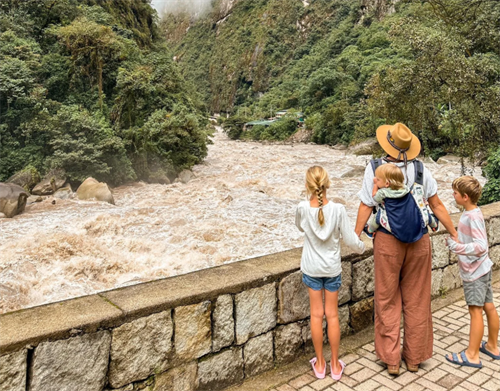
Why the Classic Inca Trail Rarely Serves Young Hikers Well?
Day Two of the classic Inca Trail is infamous. The climb from approximately 2,900 meters to over 4,200 meters happens in a single morning, often under strong sun. The descent that follows is steep and punishing on tired knees. Adults struggle here; children often shut down.
The issue is not bravery or toughness. It is physiology. At altitude, oxygen availability decreases, appetite drops, and sleep quality suffers. Children have less physiological reserve and fewer coping strategies. Add cold nights in tents and limited food choice, and the experience can quickly become one of endurance rather than discovery.
This does not mean children should never hike the classic trail. Teenagers with strong hiking backgrounds can and do succeed. But for most families, the classic route represents unnecessary risk when equally meaningful alternatives exist.
Smarter Routes for Families: Where Strategy Replaces Suffering
The Short Inca Trail: History Without the Burn
The Short Inca Trail condenses the experience into two days and one night. The hike itself lasts roughly six to seven hours, passing through cloud forest and ruins before entering Machu Picchu through the Sun Gate. Crucially, it avoids the highest passes and eliminates multiple nights of camping.
For families with children aged nine and up who are accustomed to walking, this route offers a powerful sense of achievement without cumulative exhaustion. Sleeping in a hotel rather than a tent dramatically improves recovery, mood, and appetite—factors that matter far more for children than adults often realize.
The Lares Trail: Living Culture Over Imperial Roads
The Lares Trail bypasses permit restrictions entirely and emphasizes living Andean culture. Daily distances are shorter, and the route passes through villages where Quechua traditions remain part of daily life. Children encounter alpacas, weaving looms, and farming practices that feel immediate rather than museum-like.
Many itineraries include natural hot springs, which serve both as physical recovery and emotional reward. From a family perspective, Lares works best when paired with a train journey to Aguas Calientes, allowing Machu Picchu to remain the highlight without forcing children through unnecessary strain.
Huchuy Qosqo: Gentle Walking, Deep Storytelling
Huchuy Qosqo is often overlooked, yet it is one of the most family-friendly routes in the region. The terrain is moderate, the views expansive, and the ruins accessible without extreme climbing. More importantly, the site invites storytelling—how food was stored, how water was channeled, how communities were organized.
Children engage deeply when history is framed as problem-solving rather than dates. This route excels at that.
Altitude Sickness in Children: What Actually Prevents It
Altitude sickness is not a rite of passage; it is a logistical failure. The most effective prevention strategy is not medication but pace.
Research in high-altitude medicine emphasizes gradual ascent, adequate carbohydrate intake, and rest days as the most reliable protective measures (Bartsch & Swenson, 2013). For families, this translates into three practical rules:
First, avoid flying directly to Cusco when possible. Landing in the Sacred Valley first reduces the altitude shock by over 600 meters.
Second, keep the first two days intentionally light. Short walks stimulate acclimatization better than complete rest, but strenuous hikes too early increase risk.
Third, observe behavior rather than waiting for complaints. Children often show altitude stress through irritability, withdrawal, or loss of interest rather than verbal symptoms.
Hydration matters, but forcing water can backfire. Small, frequent sips paired with warm drinks and familiar foods work best. In Peru, coca leaf tea is traditionally used for mild altitude discomfort, though families should make informed choices based on comfort and legality.
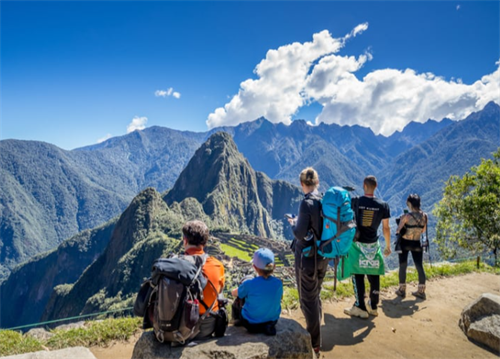
Logistics That Make or Break a Family Trip:
-Permits, Guides, and Booking Reality
Permits for the classic Inca Trail sell out months in advance and are non-transferable. While this is less relevant for families choosing alternative routes, it underscores the importance of planning early and working with reputable local operators.
Guides are mandatory on the Inca Trail and invaluable elsewhere. A good family guide adjusts pace instinctively, tells stories instead of lectures, and understands when to stop before a child asks.
-Gear: Less Is More, Especially for Kids
At altitude, every unnecessary ounce feels heavier. Children should carry only essentials—water, snacks, a light layer—while adults handle shared gear. Lightweight boots, merino socks, sun protection, and a compact rain shell are far more important than spare outfits.
High-altitude sun is unforgiving, even on cool days. Hats, sunscreen, and long sleeves prevent fatigue caused by overexposure.
-Transportation: Build in Buffers
Whether traveling by train from Ollantaytambo or transferring to a trailhead near the Urubamba River, Peru rewards flexibility. Delays happen. Families who build buffer time into connections experience far less stress—and stress management is altitude management.
Experiencing Machu Picchu With Children, Not Around Them:
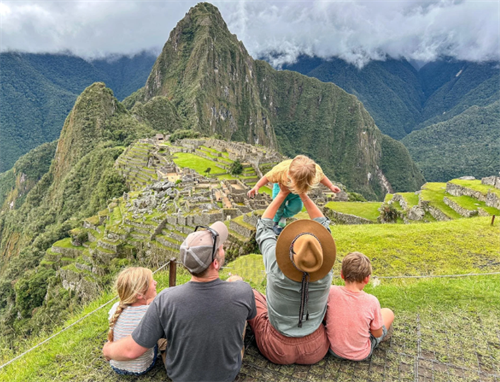
Machu Picchu itself is expansive, exposed, and emotionally overwhelming. Families do best by limiting scope and deepening focus.
Rather than attempting every viewpoint, choose a circuit that highlights terraces, water channels, and open spaces. Explain how stones fit without mortar, how drainage prevents collapse, how llamas once functioned as pack animals. These tangible details anchor awe in understanding.
Optional hikes such as Machu Picchu Mountain—not Huayna Picchu—offer older children a sense of accomplishment without extreme exposure. The reward is not just the view, but the confidence gained along the way.
Long after children forget the names of passes and ruins, they remember how it felt to be trusted, challenged, and supported. They remember shared exhaustion and shared laughter, hot soup at altitude, and the moment the clouds lifted over stone walls older than history books.
Machu Picchu, when approached with humility and strategy, teaches families something rare in modern travel: that the journey matters more than the badge of difficulty. Choosing the right path—geographically and emotionally—turns a famous destination into a personal story.
References:
[1]Bartsch, P., & Swenson, E. R. (2013). Acute high-altitude illnesses. The New England Journal of Medicine, 368(24), 2294–2302. https://doi.org/10.1056/NEJMra1215423
[2]Hackett, P. H., & Roach, R. C. (2001). High-altitude illness. The New England Journal of Medicine, 345(2), 107–114. https://doi.org/10.1056/NEJM200107123450206
[3]Ministerio de Cultura del Perú. (2024). Regulations for the use of the Inca Trail and Machu Picchu Historic Sanctuary. Government of Peru.
[4]National Geographic Society. (2023). Alternative trekking routes in the Sacred Valley and Andes. National Geographic Travel.
Recommended for you: