


Family Self-Driving Tour Guide to Stonehenge in Britain: A Day Combining British Culture with Bath and Roman Baths
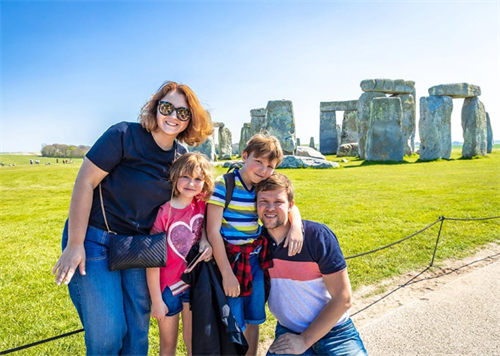
There are places that announce themselves loudly, and others that ask you to lean in. Stonehenge belongs to the second category. Long before children notice the stones themselves, they notice the space around them—the wind across Salisbury Plain, the openness of the sky, the way the monument feels both deliberate and unresolved. For families, this quiet sense of mystery is not a drawback; it is the invitation.
When Stonehenge is paired thoughtfully with Bath and its Roman Baths, a self-driving day becomes something rare in modern travel: a coherent, human-scale journey through time. Prehistoric ritual, Roman engineering, and Georgian design unfold not as isolated attractions but as chapters in a single story.
Why Self-Driving Works Best for Families?
Stonehenge is easy to reach by tour or public transport, but families often benefit from autonomy more than efficiency. Timed-entry tickets, variable traffic on the A303, and children’s fluctuating energy levels all favor a self-driving approach.
Driving allows you to select the most atmospheric visiting windows. Lonely Planet and English Heritage both note that early mornings and late afternoons are consistently quieter, with softer light and fewer crowds, even in peak summer (English Heritage, 2023; Le Nevez, 2025). With your own car, arriving at one of these calmer slots becomes practical rather than aspirational.
Self-driving also reframes the journey between sites. The road from Stonehenge to Bath passes through chalk downland shaped by thousands of years of human use. For children, watching the landscape change—open plains giving way to river valleys—makes it easier to understand why different civilizations settled where they did. This kind of contextual learning rarely happens on a coach.
Most importantly, a car gives families permission to pause. A short stop at a farm shop, a picnic pulled forward because energy is fading, or a delayed departure because curiosity is peaking—these moments often become the most memorable parts of the day.
Planning the Day: Tickets, Timing, and Realistic Expectations
Stonehenge Tickets and Costs:
Stonehenge operates on a timed-entry system, and advance booking is strongly advised. Ticket prices fluctuate using a dynamic pricing model, typically ranging between £28 and £34 for adults, with discounts for families, seniors, and students. Children under five enter free, and essential companions for visitors with disabilities are not charged (Le Nevez, 2025).
For families, the ticket price is best understood not as access to the stones alone, but to an entire interpretive experience. The Visitor Centre exhibitions, reconstructed Neolithic houses, shuttle transport, and landscape access all contribute to understanding what would otherwise feel abstract.
Parking costs £3, payable via the Pay By Phone app. Downloading the app before arrival is sensible, as mobile signal can be inconsistent on the plain.
How Long to Allow:
Plan for a minimum of two hours, though three is more realistic if you want children to explore without feeling rushed. Lonely Planet rightly emphasizes that Stonehenge is more than a brief stop; the surrounding landscape and exhibitions are integral to the site’s meaning (Le Nevez, 2025).
If combining Stonehenge with Bath in one day, treat Stonehenge as your morning anchor. Children tend to be more focused earlier in the day, and the site’s open exposure makes it less forgiving later, particularly in winter when light fades early.
Beginning at the Visitor Centre: Context Before Stones
Many families instinctively rush toward the Stone Circle, but this is one of the few places where starting indoors improves the outdoor experience.
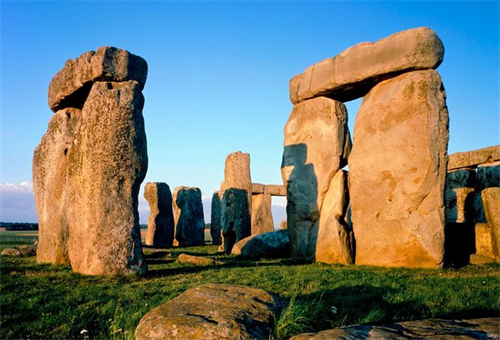
The Stonehenge Visitor Centre offers a clear, well-paced introduction to the site’s development over more than a thousand years. Displays explain how the first phase began around 3000 BCE, with a circular ditch and burial pits now known as the Aubrey Holes. Later phases introduced massive sarsen stones from the Marlborough Downs and bluestones hauled from as far as Wales—and, as recent research suggests, even northeast Scotland (Darvill et al., 2012).
For children, the highlight is often the 360-degree seasonal projection, which shows how the monument aligns with midsummer sunrise and midwinter sunset. This visual framing makes it easier to understand why Stonehenge is not just a structure, but a relationship between land, sky, and time.
Outside, the reconstructed Neolithic houses are particularly effective for families. Volunteers demonstrate ancient techniques—rope making, flint tools, bread baking—and are usually happy to answer children’s questions. These encounters humanize prehistory, turning anonymous builders into real people with skills and routines.
Reaching the Stone Circle: Walk or Shuttle?
From the Visitor Centre, families have two practical options: a frequent shuttle bus or a 2.6-mile circular walk through the ancient landscape.
For younger children, limited time, or challenging weather, the shuttle bus is the sensible choice. It runs every few minutes and drops visitors close to the Stone Circle path. Accessibility is excellent, and many families note that the shuttle significantly reduces fatigue.
If time and energy allow, walking part or all of the route offers a deeper sense of place. One effective compromise is to ask the shuttle driver to drop you at Fargo Woods, then walk the remaining stretch past ancient earthworks like the Cursus. Cresting the hill and seeing Stonehenge appear gradually is a moment that often leaves a lasting impression.
Whichever option you choose, prepare fully before leaving the Visitor Centre. There is no shelter, food, or water at the Stone Circle itself.
At the Stone Circle: What to Expect and How to Frame It for Kids
Visitors walk a defined path that brings them within about 5 meters (16 feet) of the stones. Access to the inner circle is restricted to protect the monument, its delicate lichen, and the experience itself. Framing this boundary as preservation rather than prohibition helps children understand why distance matters.
Key features such as the Heel Stone and Slaughter Stone mark alignments with the midsummer sunrise. For families, these are ideal points to discuss how ancient people observed the sky long before modern instruments.
Nearby burial mounds—the Cursus Barrows and King Barrows—extend the story beyond the circle. They show that Stonehenge was part of a much larger sacred landscape, used and reused over centuries. Walking even a short distance toward these features gives children a sense that history does not sit neatly inside fences.
From Stone to Water: Driving Toward Bath
The transition from Stonehenge to Bath is not just geographical; it is conceptual. Stonehenge represents collective effort without written language or metal tools. Bath represents applied engineering and urban planning.
On the drive, point out how the landscape changes. Rivers become more prominent, valleys deepen, and settlements cluster around water. This sets the stage for understanding why the Romans built a city around Bath’s hot springs rather than on open plains.
A lunch stop before entering central Bath helps reset energy levels. Choose a café that emphasizes local ingredients—Somerset cheeses, lamb, or apples—and you introduce children to British food culture as a regional expression rather than a stereotype.
The Roman Baths: Engineering That Still Feels Modern
The Roman Baths are one of Britain’s most effective family-friendly historic sites because their function is immediately understandable. Water flows, heats, cools, and circulates in ways that mirror modern systems.
Archaeological interpretation shows that these baths were social spaces as much as hygienic ones—places where status, politics, and daily life intersected (Cunliffe, 2016). For children, this social framing makes the site relatable. It feels less like ruins and more like a busy civic center.
Downloadable audio guides are available and can be accessed on your phone. Wi-Fi is offered at the Visitor Centre, but downloading in advance avoids frustration. As with Stonehenge, selective listening works best. Choose highlights and allow time for observation and conversation.
Bath Beyond the Baths: Georgian Order and Walkability
Bath’s Georgian architecture offers a visual calm after the intensity of Roman history. Designed around symmetry and proportion, areas like the Royal Crescent reflect Enlightenment ideas that beauty and order could shape society.
For families, Bath’s walkable scale is its greatest strength. Short distances, open crescents, and river views provide natural pauses. Asking children why buildings look uniform or why streets curve introduces design thinking without formal lessons.
Ending the day with a gentle walk rather than another museum helps prevent overload and allows reflection to settle in naturally.
Managing Energy, Weather, and Family Rhythm:
This itinerary works because it alternates focus with release. Stonehenge demands attention; the drive allows rest. The Roman Baths concentrate learning; Bath’s streets invite wandering.
Assigning small roles—navigator, photographer, question-keeper—keeps children engaged. Reflection on the drive home reinforces memory: one surprising fact, one favorite moment, one unanswered question.
British weather remains unpredictable, but Stonehenge in mist or drizzle often feels more atmospheric than disappointing. Preparation matters more than forecasts.
What Children Carry Away From This Day:
Without realizing it, children learn how humans adapt to environment over time. Stonehenge shows coordination without technology. The Roman Baths demonstrate engineering discipline. Georgian Bath illustrates how design shapes daily life.
More importantly, they learn that history is not static. It is something you walk through, question, and reinterpret together.
As evening settles and the car grows quiet, it becomes clear that the success of this day lies not in efficiency, but in coherence. Stonehenge does not explain itself; Bath does not demand reverence. Together, they encourage curiosity.For families, that curiosity is the real souvenir. When travel respects pace, conversation, and wonder, children do not merely visit history—they participate in it. And that is why this self-driving route remains one of the most rewarding single-day journeys in Britain.
References:
[1]Cunliffe, B. (2016). Britain Begins. Oxford University Press.
[2]Darvill, T., Marshall, P., Parker Pearson, M., & Wainwright, G. (2012). Stonehenge remodelled. Antiquity, 86(334), 1021–1040. https://doi.org/10.1017/S0003598X00048225
[3]English Heritage. (2023). Stonehenge: History, tickets, and visitor information. https://www.english-heritage.org.uk
[4]Le Nevez, C. (2025). The Lonely Planet guide to Stonehenge, England. Lonely Planet.
[5]UNESCO World Heritage Centre. (2021). Stonehenge, Avebury and associated sites. https://whc.unesco.org
Recommended for you: